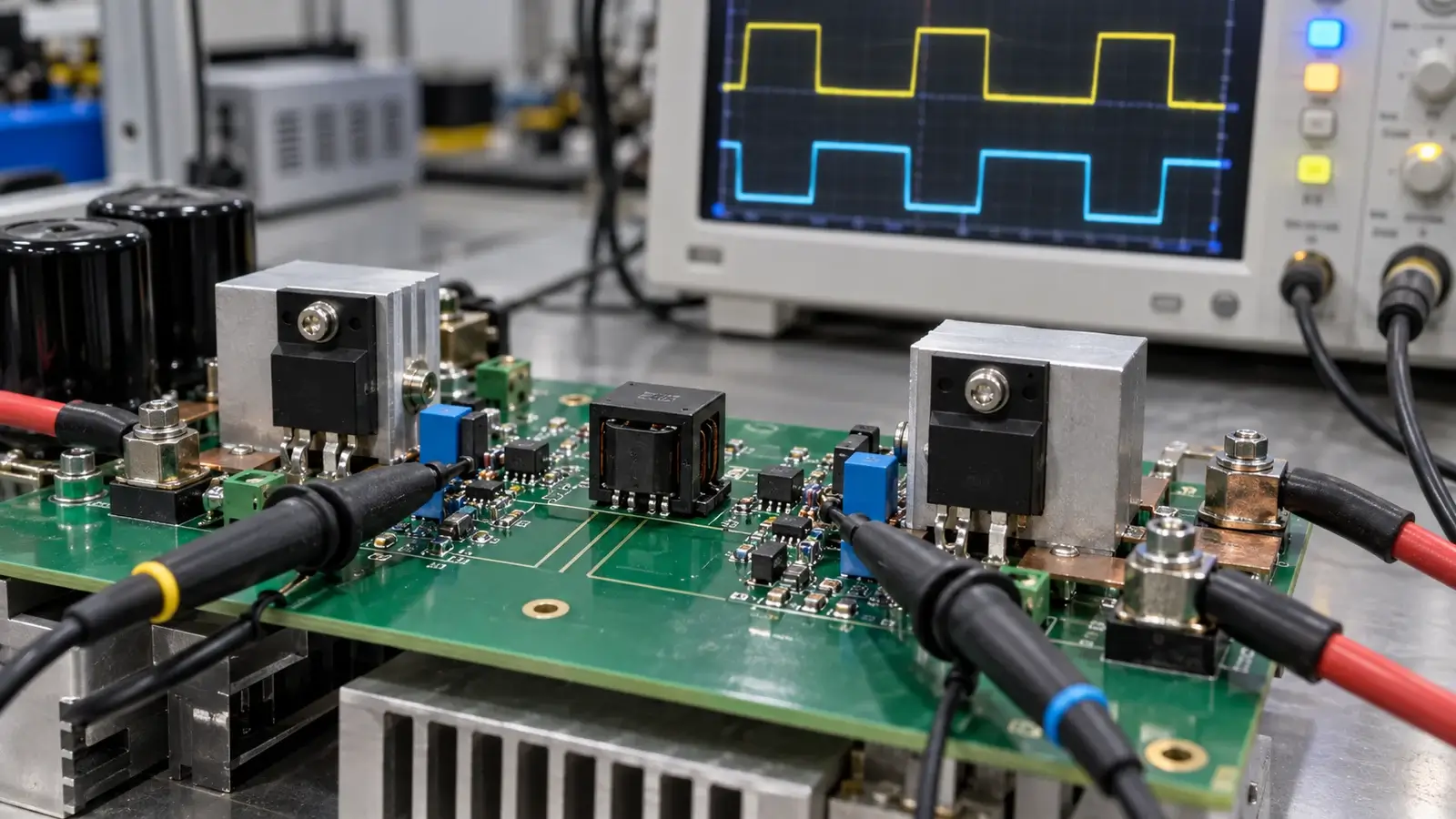
High-Frequency Core Loss Analysis and Optimization Techniques for Power Transformers
This technical article explains the mechanisms of high-frequency core loss — including hysteresis, eddy current, and anomalous losses — and offers practical design and simulation methods to minimize them. It discusses how core materials, geometry, and flux control affect transformer performance, providing engineers with clear optimization strategies for high-efficiency magnetic designs.
Nov 13, 2025How to Select Magnetic Core Materials for High-Frequency Transformers
This article explains how to choose the right magnetic core materials for high-frequency transformers. It compares ferrite, iron powder, and nanocrystalline cores, analyzes core losses and permeability, and provides design guidance for engineers aiming to balance performance, efficiency, and cost in modern power electronics.
Nov 5, 2025How the Air Gap Affects Transformer Inductance and Energy Storage
The air gap in a transformer core reduces effective permeability, increases energy storage, and prevents magnetic saturation. By controlling air-gap length, designers can fine-tune inductance and maintain stability in high-frequency converters such as flyback, PFC, and buck designs.
Oct 28, 2025Why Does a Transformer Core Saturate?
Transformer core saturation occurs when magnetic flux density exceeds the material’s limit, causing inductance collapse and current surge. It results from excessive voltage, DC bias, or insufficient air gap. Designers prevent saturation by controlling flux density, choosing proper materials, and introducing air gaps to maintain stable performance.
Oct 23, 2025Why Do Transformers Use Air Gaps Instead of Low-Permeability Cores?
Ferrite cores use air gaps to prevent magnetic saturation and control inductance precisely. While low-permeability materials like metal powder cores could theoretically eliminate the gap, their high cost, greater eddy current loss, and limited tuning flexibility make them impractical. Ferrite cores with air gaps offer low loss, high stability, and cost-effective performance for modern transformers.
Oct 20, 2025What Is a Digital Power Supply?
A digital power supply uses digital signal processors or microcontrollers to control output through software algorithms instead of analog circuits. It supports communication protocols like CAN or PMBus, enables remote monitoring, and provides precise, efficient, and programmable power control. Compared to analog supplies, it delivers higher accuracy, better efficiency, and advanced monitoring—making it ideal for data centers, EV chargers, and industrial applications.
Oct 14, 2025Please Contact Us